Is your bulldozer in need of professional repainting or refurbishment? GetPro is here to assist you in achieving the right surface preparation & painting. We will turn your equipment into exactly what you want– a sharp-looking piece of machinery.
Farm machinery requires expert surface preparation and durable coating for long-term protection. We’ve been at in Industrial Painting service for a good 25 years and have become the go-to experts in your area. Whether it’s cleaning, prepping, or applying paint, we handle it all with care and precision. For top-notch painting on your industrial equipment, reach out to us at GetPro Painting. Front-end loaders and other heavy equipment benefit from precision industrial painting services.
A quick look at well-painted equipment reveals a clean, modern, well-maintained, and efficiently managed facility. This instills confidence in customers and fosters pride among your workforce. Although the way a business looks is crucial, GetPro’s industrial equipment painting services offer practical advantages as well.
No matter if your industrial equipment is working indoors or braving the elements outdoors, it has to be shielded from the tough conditions of a factory. Things like scorching heat, freezing cold, ash, acid rain, airborne debris, and more can really degrade industrial equipment over time. It is important to note that paint does more than just make your industrial equipment look good – it shields it from corrosion, rust, and other harm. It’s a smart move in any economic situation to prolong the life of your industrial gear through regular upkeep and a new paint job when necessary.
A quality paint job acts as a protective barrier against moisture & corrosive chemicals. This all simplifies the task of keeping machinery free from dirt, oil, debris, & grease. Shielding your equipment from wear and corrosion, along with the ease of maintaining cleanliness, will result in a long equipment operational life. It will lead to cost savings in the long term.
We employ a variety of methods, including;
Our paints are customized for your equipment’s function, location, and temperature requirements.
You can trust that our machine painting team is highly trained & closely supervised. GetPro is a professional contractor providing painting, coating, and equipment painting services.
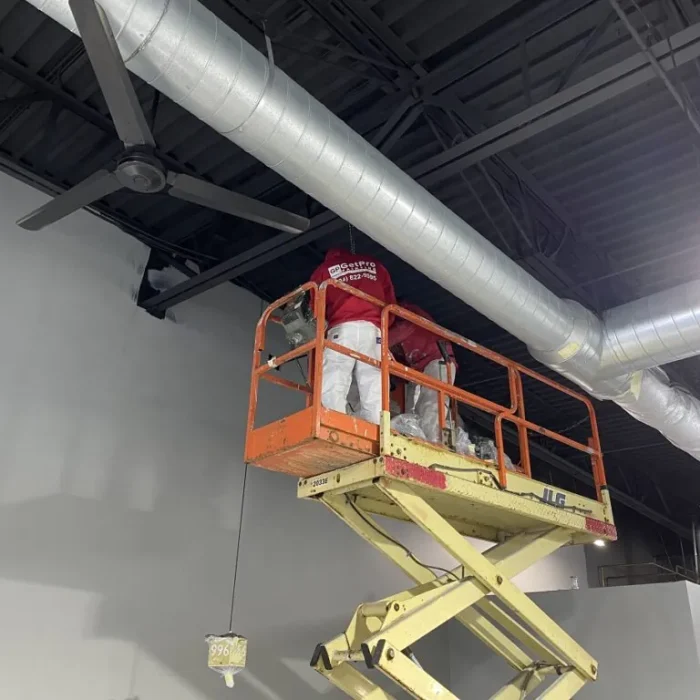
We are ready to handle industrial machines of various sizes, heights, and configurations. We ensure access through scaffolding, ladders, or lifts. GetPro painters hold MI-OSHA training & certification. Our industrial equipment painters wear all the necessary safety equipment for the job.Seasoned managers and CEOs understand the critical importance of well-maintained equipment for the efficiency of their operations. Properly painted machinery will resist wear and corrosion, making it easier to maintain cleanliness.
GetPro provides services for various types of industrial equipment and machinery, including:
Getting the surface ready is a key part of painting industrial equipment like a professional. If you avoid skipping or overlooking this step, the outcome won’t have that polished look or endure as long. That’s why we’ve invested a lot of time and training over the years to nail down the preparation process just right.
Here at GetPro Painting, our technicians are skilled in using a range of techniques to thoroughly clean industrial equipment. For lighter cleaning needs, we might employ grease cutters, sanding, scraping, and other straightforward methods. However, when it comes to more demanding situations, like cleaning fuel & oil tanks, tractors, forklifts, portable heating units, light towers, and the various types of industrial equipment we paint regularly, we often need to use more robust cleaning methods.
If sandblasting can effectively clean away grease, oil, grime, and other debris without causing harm to industrial equipment, it’s our go-to choice due to its effectiveness and cost-efficiency. Nevertheless, we have an array of abrasive blasting techniques available. We deploy these methods as needed, always taking care to safeguard your industrial equipment.
We employ diverse methods such as almond or coconut shell blasting, walnut shell blasting, corn cob blasting, dry ice blasting, and more. For industrial machinery, vacuum blasting is often the optimal choice. This technique sucks up materials and debris into a specialized system, separating the debris and enabling the reuse of materials. Once all impurities are cleared and the industrial equipment is thoroughly sanded, we proceed to the painting phase.
A meticulously prepared surface is crucial for optimal adhesion when we apply our top-notch primers, paints & coatings. As the foremost industrial equipment painting contractor, we prioritize the quality of the materials we use. At GetPro Painting, our focus is on delivering outstanding value. We understand that opting for cheaper materials might seem like a cost-saving move that delivers long-term value.
In truth, inexpensive materials often demand extra coats to achieve the same coverage as their higher-quality counterparts. Additionally, these budget-friendly products lack durability, leading to more frequent repainting. When you weigh these factors, it becomes evident that the most cost-effective approach involves using high-quality paints and relying on the expert application skills of GetPro Painting.
The preferred options for painting industrial equipment are enamels and powder coatings applied using electrostatic methods. These materials not only look good but also offer durability, and they come in a diverse range of colors. Typically, we apply them using powder coating methods or spray painting, and the selection depends on the size and purpose of the industrial equipment.
We clean equipment thoroughly and ensure cleanliness with tenting & masking. GetPro always applies the perfectly suitable product for your equipment and environment. We can use methods like dry ice blasting, sandblasting, and electrostatic painting (for precise paint application on curved surfaces).
We’re equipped to manage fleets and provide custom fleet designs and special designs as needed.
Typical lead times range from 1–2 weeks. We handle production volumes that vary from low to high, accommodating both small & large runs. We uphold the highest standards in our work, meeting the majority of Mil profile and cleanliness specifications as established by the Society for Protective Coatings.

When we put together a cost estimate for painting industrial equipment, we take a close look at how it’s used and the surroundings in the industrial space. During this evaluation, we figure out the best type of paints or coatings and the most suitable application method(s) for the task at hand. Our aim is to choose the most cost-effective system that gives us the desired results.
Once we complete this analysis, we will generate an estimate you can trust. Our substantial experience has provided us with a thorough comprehension of Painting Industrial Interior Space. We’re familiar with the critical areas that require attention. We’re well-versed in the most effective painting techniques and the appropriate primers, paints, and coatings that ensure the quality and durability we aim for. Although there’s a chance of potential changes that might impact the initially quoted price, our customers have learned over the years to value the precision of our estimates.
Paint used on industrial equipment needs to be durable & resistant to corrosion, chemicals, abrasion, and weather. Common types of paint used for industrial equipment include:
The choice of paint depends on factors such as the type of equipment, environmental conditions, and specific requirements for durability and performance.
Two-component polyurethane paint is known for its exceptional durability. It creates a tough and resilient coating that withstands abrasion, impact, chemicals, and UV radiation. It is ideal for surfaces exposed to heavy use, harsh environments, and extreme weather conditions.
To paint industrial equipment, we follow these steps:
This process ensures a durable, professional finish and helps maintain the equipment’s value.
Industrial painting requires various equipment to ensure a high-quality finish. Key equipment involved includes:
Using the right equipment is crucial for achieving a durable and professional finish.
Preparing industrial equipment for painting involves several crucial steps to ensure a durable & professional finish:
By meticulously following these steps, the equipment will be properly prepared for a high-quality paint job.
Fire and Explosion Prevention:
Skin and Eye Protection:
Inhalation Protection:
General Safety Measures: